the film, before it’s a film
What to expect: the movie storyboard
About two minutes, eleven scenes, no filming needed from anyone. The film now follows the same order a new client experiences things: reaching out, meeting first, then the work itself. The two scenes marked “new” cover getting started (the first message, the free initial consultation, and the “yes” that books us in); everything else you’ve seen before, just regrouped. The words are lifted from the what-to-expect page you approved, and every picture is a drawn scene, no real people, no real homes. Read it top to bottom and you’ve watched the film in your head. Tell us which pictures feel right, which don’t, and anything you’d change.
Cards marked “optional” only appear if the pacing allows; the film works without them. The two new scenes now have their pictures drawn in, first drafts: tell us if they feel right and we’ll polish or redraw.
Chapter one · reaching out
Open, warm
It can be a big step, letting someone into your home. So here’s what to expect.
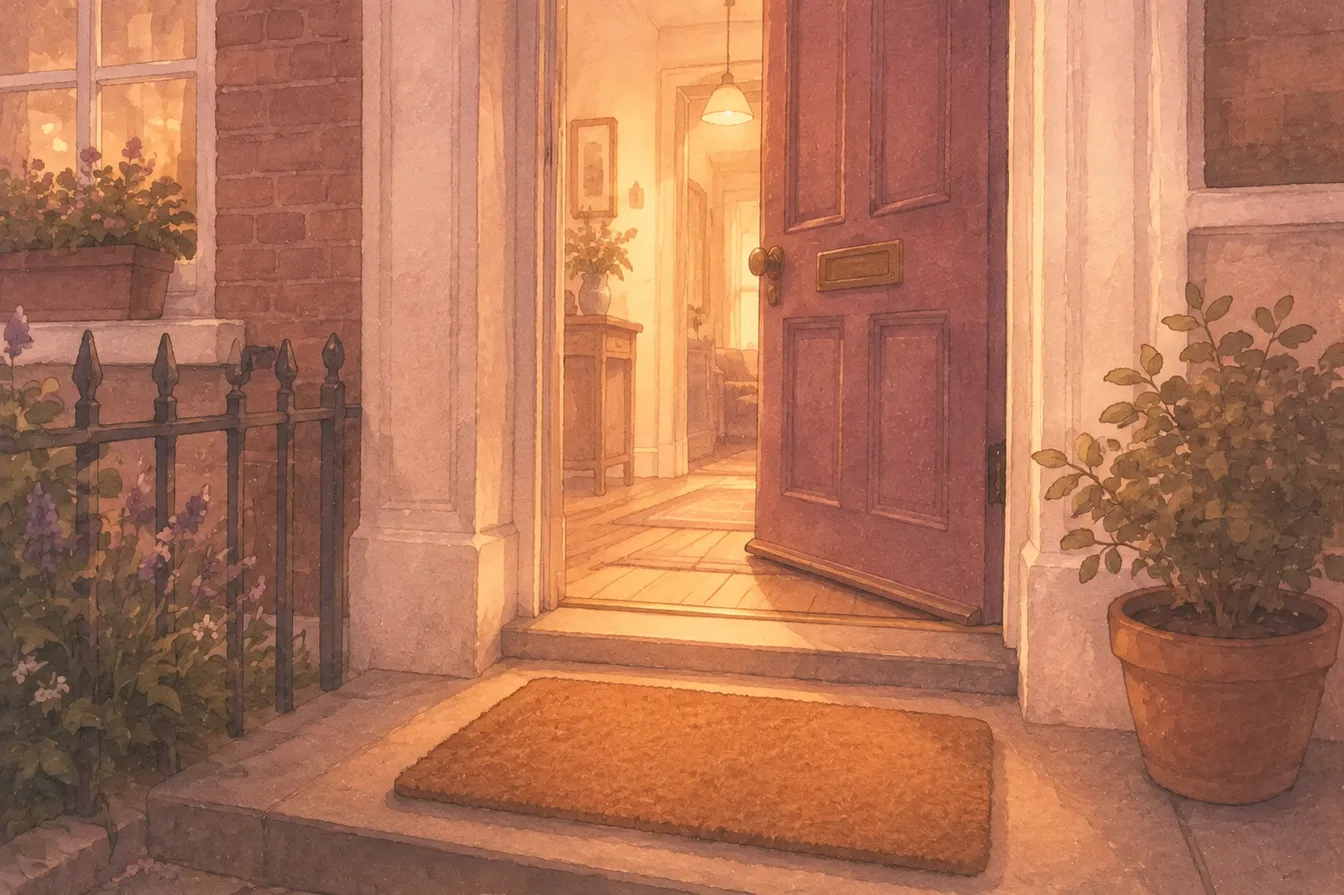
Front door opening to warm light; Healing Spaces logo in the corner. The title words sit over this still.
It starts with a message
It usually starts with a message: a text, an email or a call, whatever feels easiest. Ask anything, take your time. No pressure, and nothing to prepare.
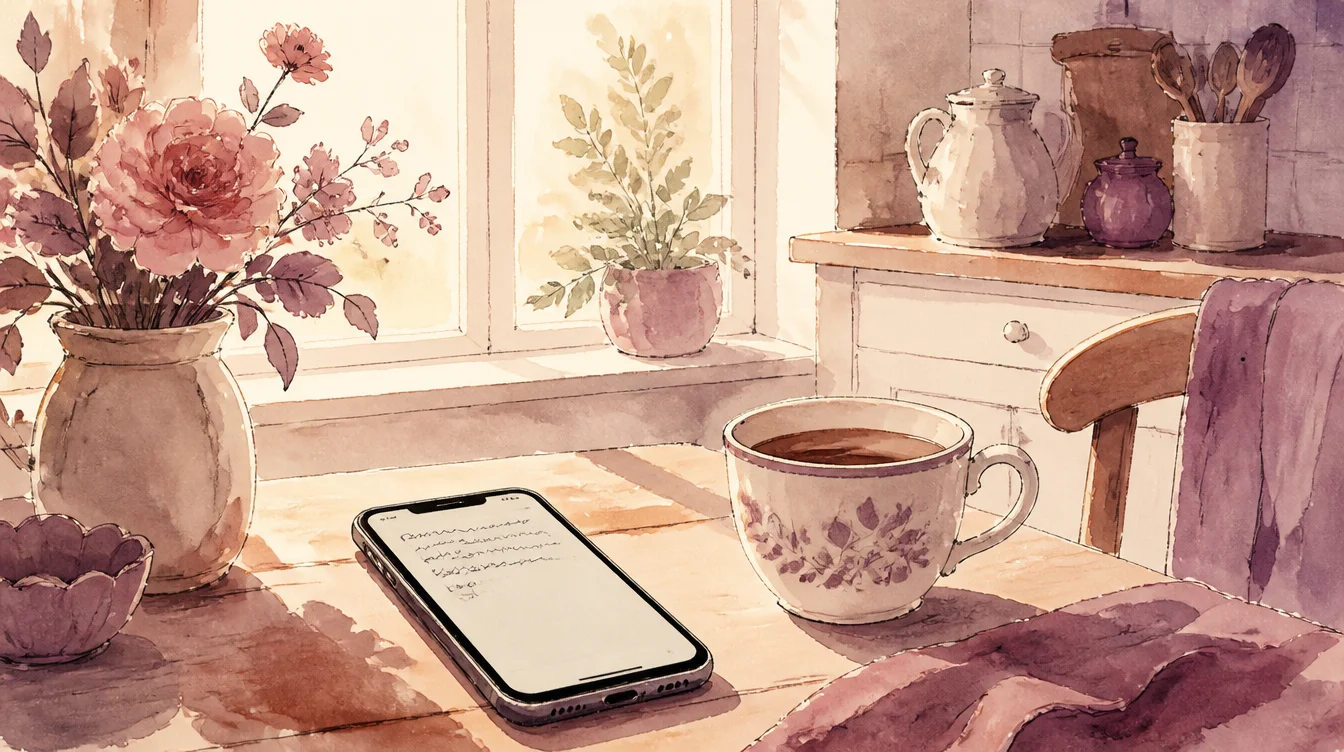
A phone resting on a kitchen table next to a cup of tea, a short message half-written, warm light. Drawn like everything else, no real app on the screen.
The person who turns up
Decluttering, organising and cleaning are part of it, but the heart is support from someone who’s been there. Kari has lived the other side of this work: a home she wouldn’t have let anyone see. Not an expert arriving to fix you, someone who gets it, working beside you.
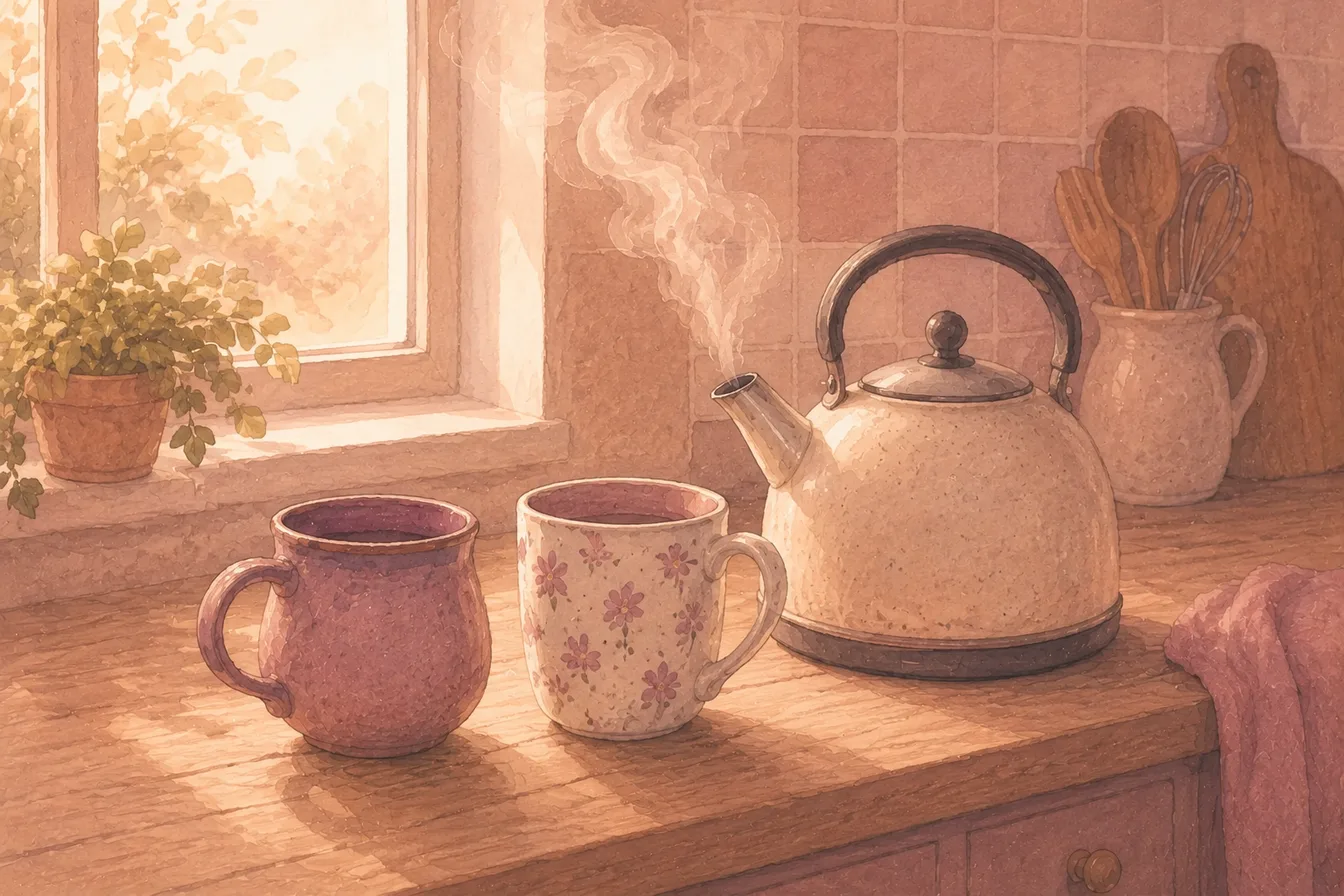
Kettle on, two mugs. Calm, domestic, human. Then your two-teas picture.
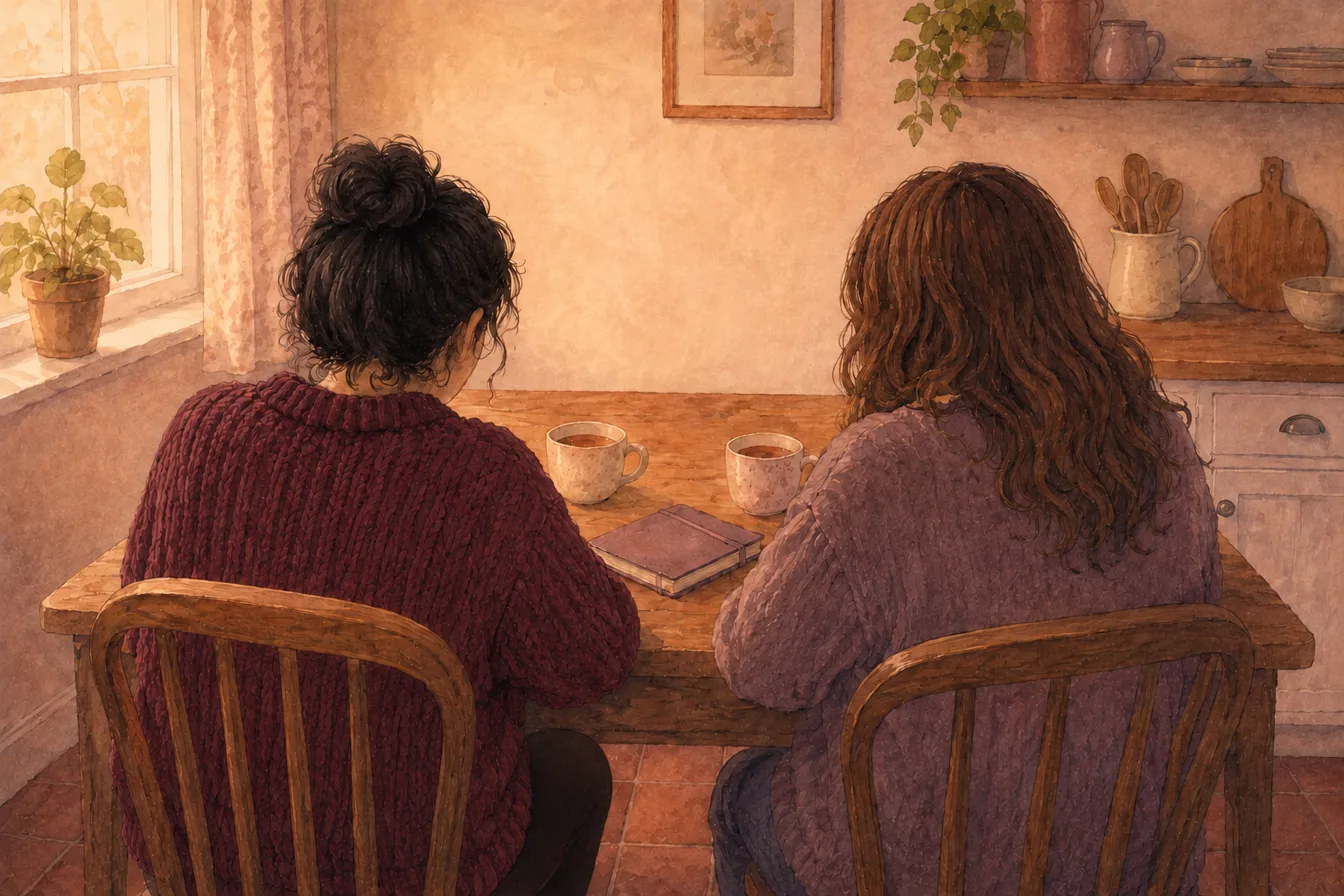
“And when it helps, Kari’s honest about her own journey. Not just ‘I have been there’; sometimes it’s ‘I’m here right now’.”
Chapter two · meeting first
The free initial consultation, and your “yes”
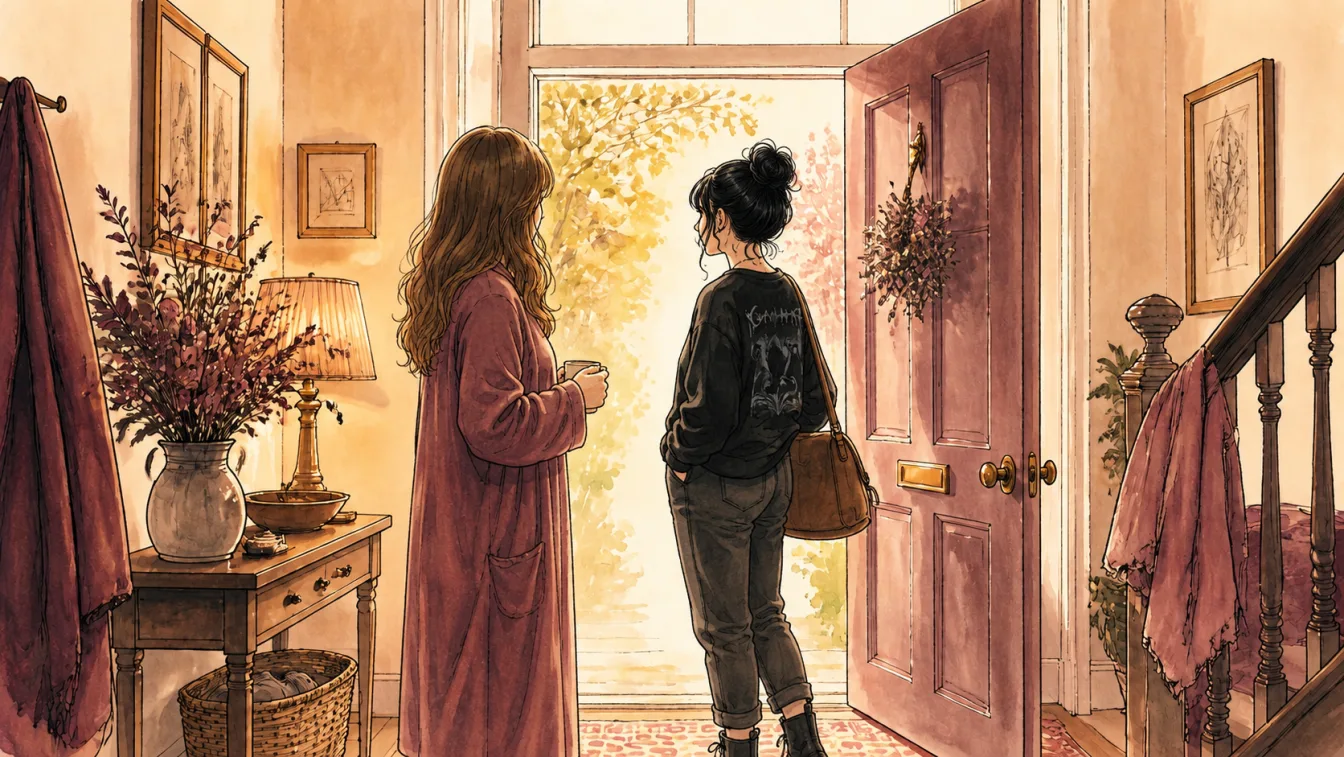
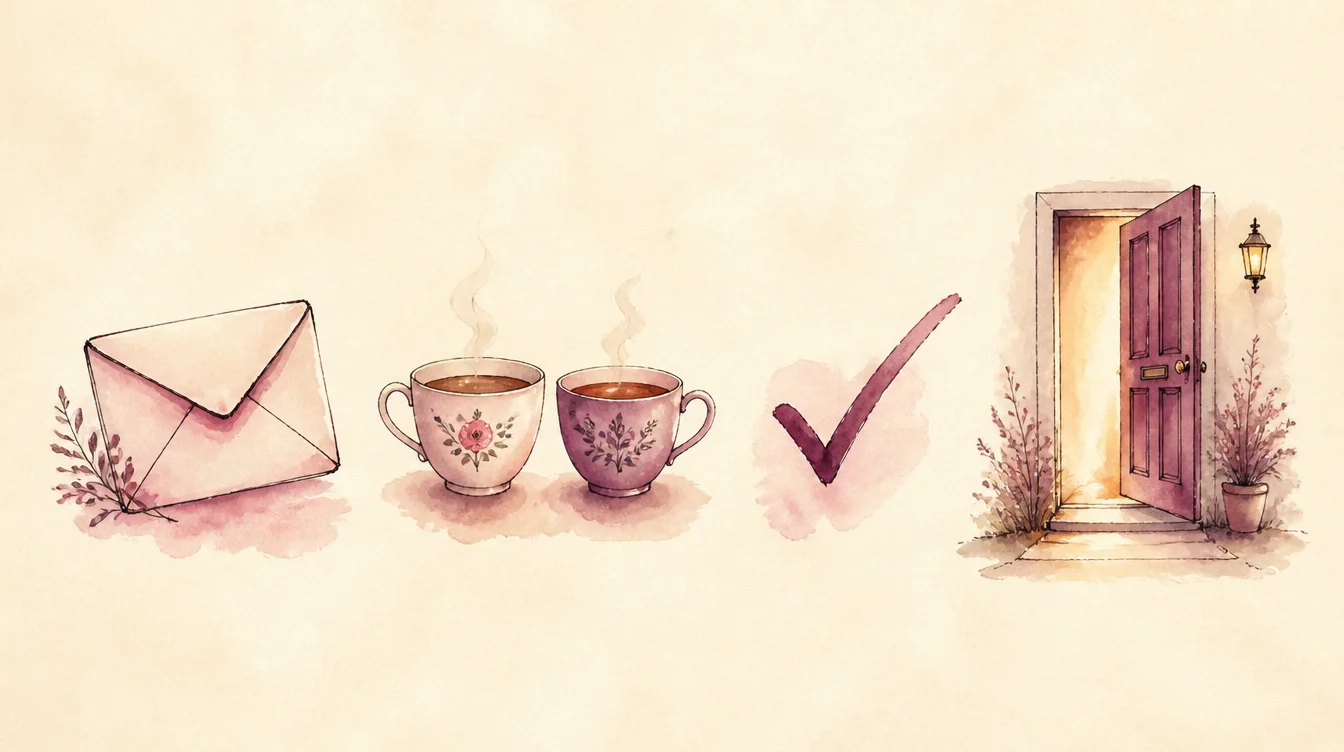
If you’d like to go ahead, the next step is usually a free initial consultation: we come to you, look together, and talk through what would help. It can happen online if that’s easier. Then, when you’re ready, we email you our terms. Reply “yes” and we’re booked.
Two caption cards of five seconds each. Card one: a welcome at the door, backs or side views only. Card two: the little journey drawn as four warm steps, below.
Don’t tidy up first
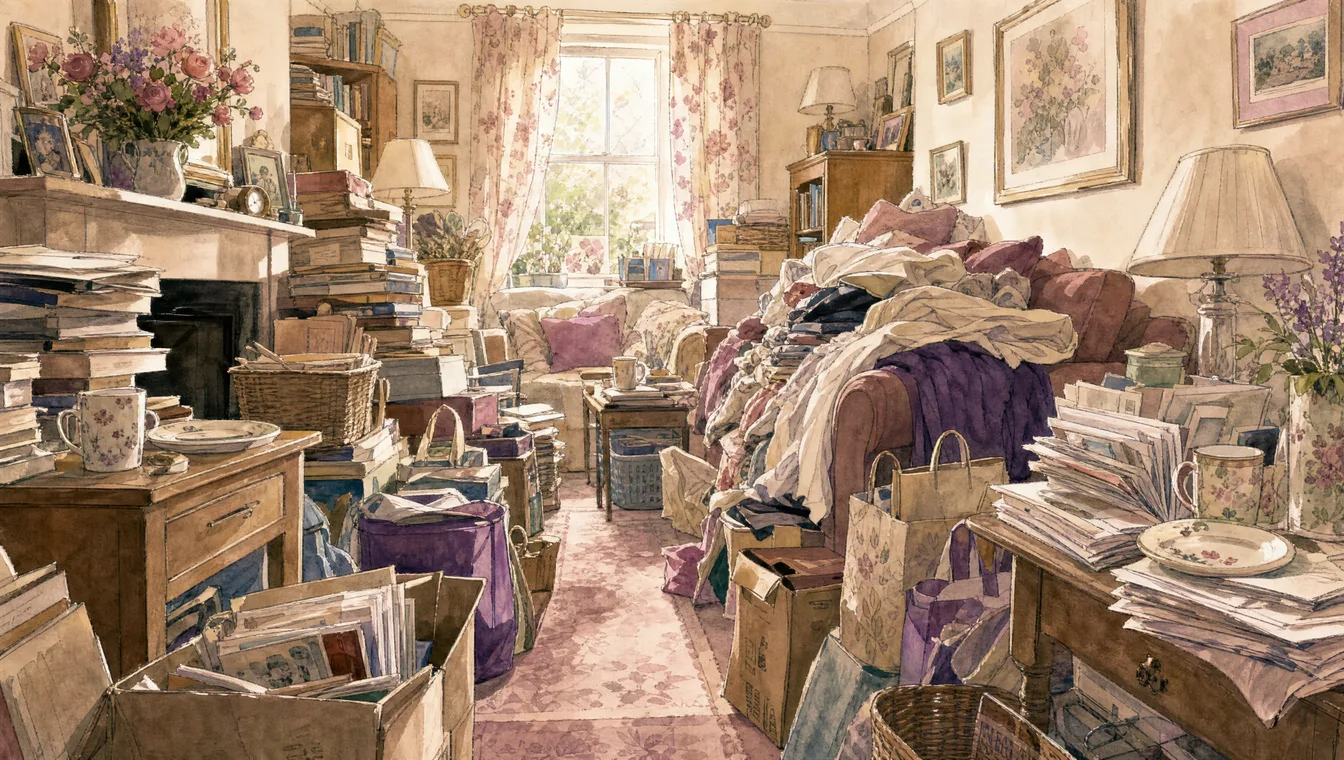
Please don’t tidy up before we come. We mean it. There is no state of a home that shocks us. Seeing your home as it really is helps us help you.
A very full room drawn with warmth and dignity: light through the curtains, flowers on the mantelpiece, no gloom. Sits here because the advice matters before that first visit.

Chapter three · the work itself
The honest answer to “how long?”
How long will it take? Honestly: homes can take years to fill, and sorting can take more than a visit or two. Clutter is a pile of hidden decisions, and finding out what’s really in it is the work itself. So any time guess we give is there to help you plan, please hold it loosely. If you’d like certainty, give us a budget and we’ll do our best to make the most of the time inside it.
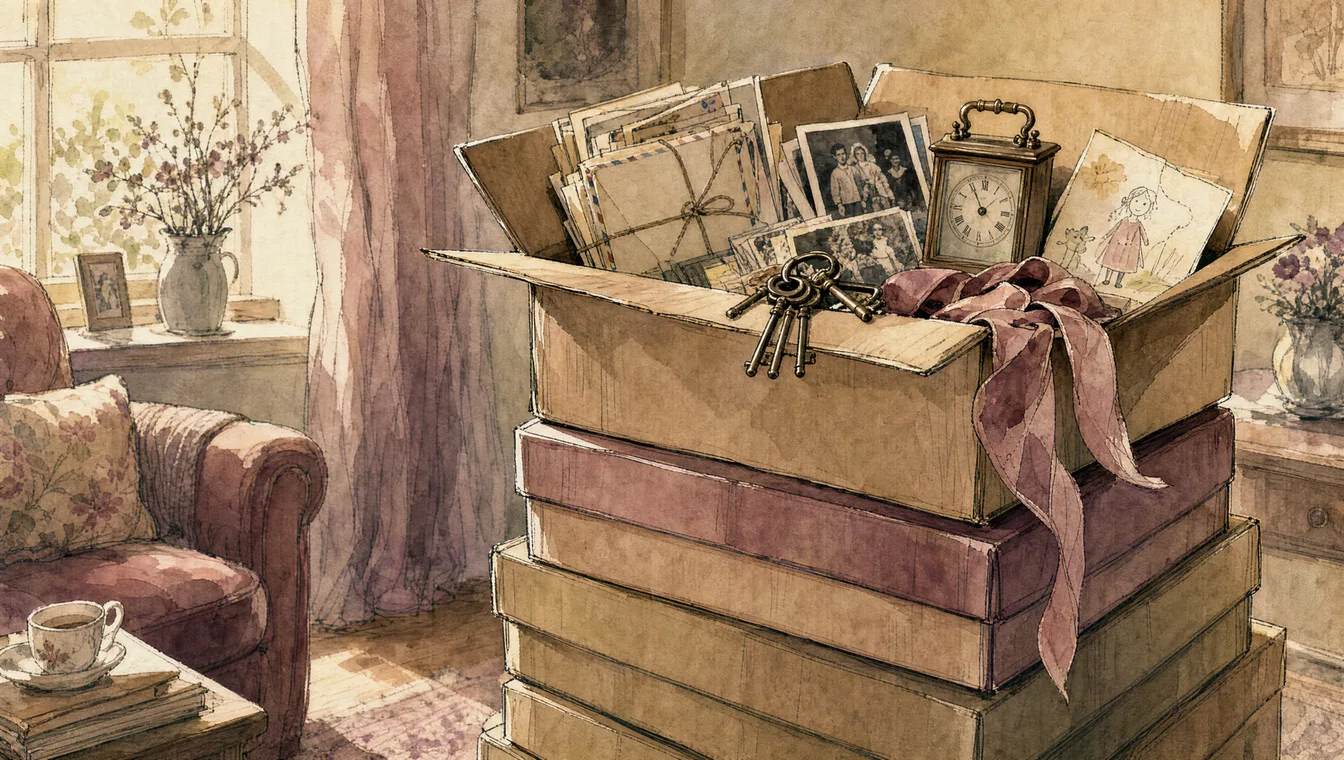
The words run as two cards of five seconds each. A stack of closed boxes, the top one open, everyday treasures spilling out: this is what “hidden decisions” looks like, and why time guesses are held loosely.
One area at a time
Trying to tackle too much at once is a common recipe for failure: hours of effort with no real sense of progress. So we usually ask which room, and which spot in it, would bring most relief, and we’ll start there. A small, visible win feeds motivation, and can bring a surprising amount of relief, satisfaction and hope.
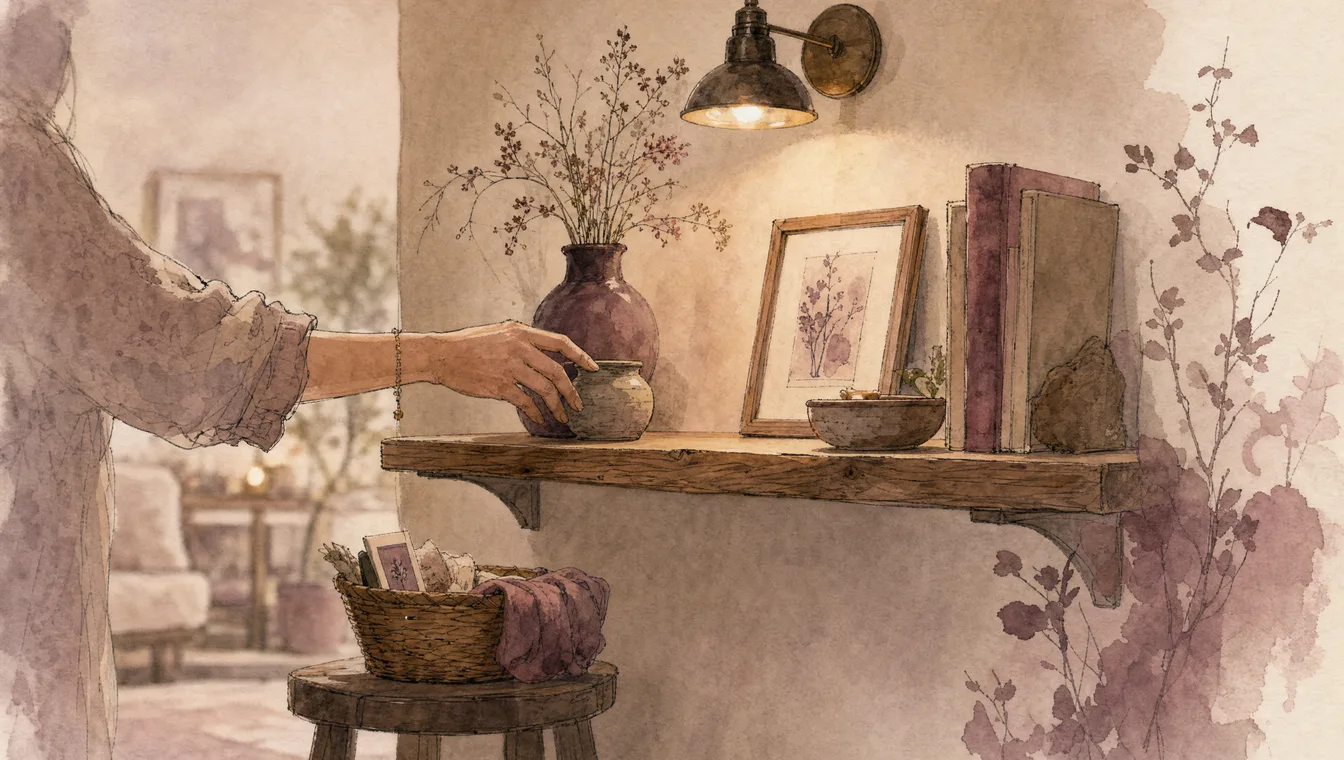
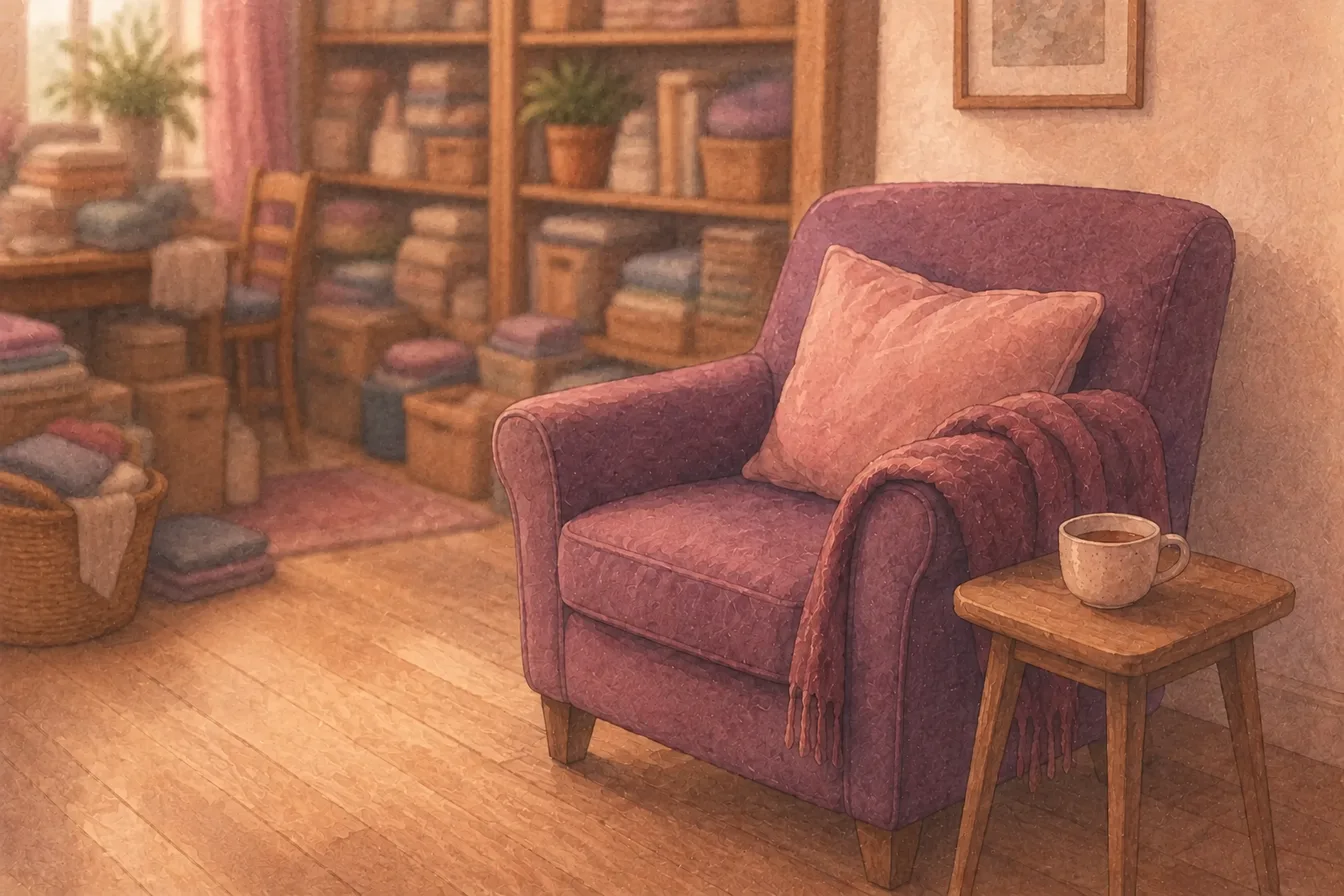
One shelf being arranged while the rest of the room stays soft; then the calm corner it earns.
The messy middle, owned proudly
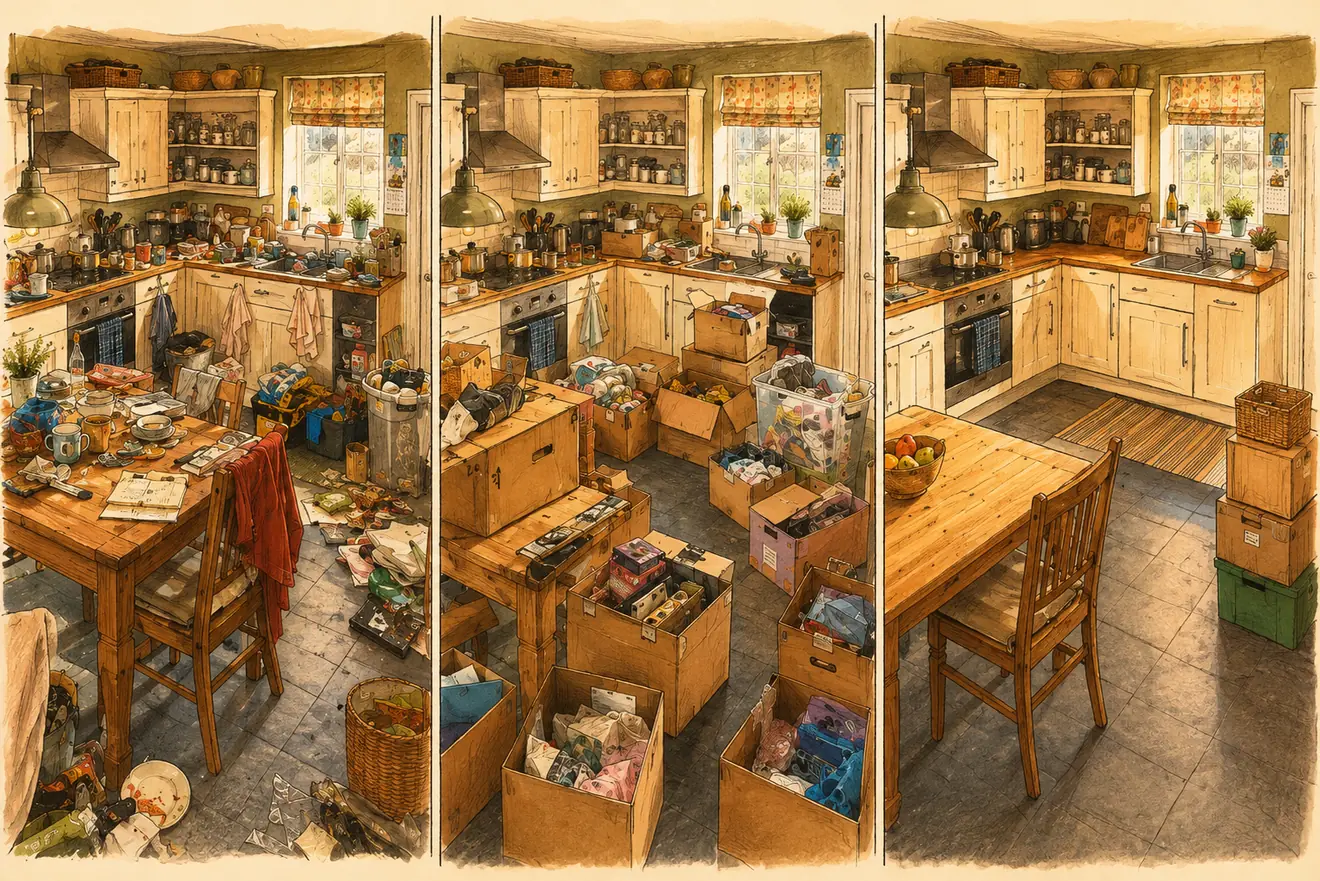
Fair warning: halfway through, a room can look worse than when we started. Sorting means taking things out before they go back in. That’s not mess; it’s normal progress. And if a room isn’t finished at the end of a session, we aim to leave everything as safe and tidy as possible.
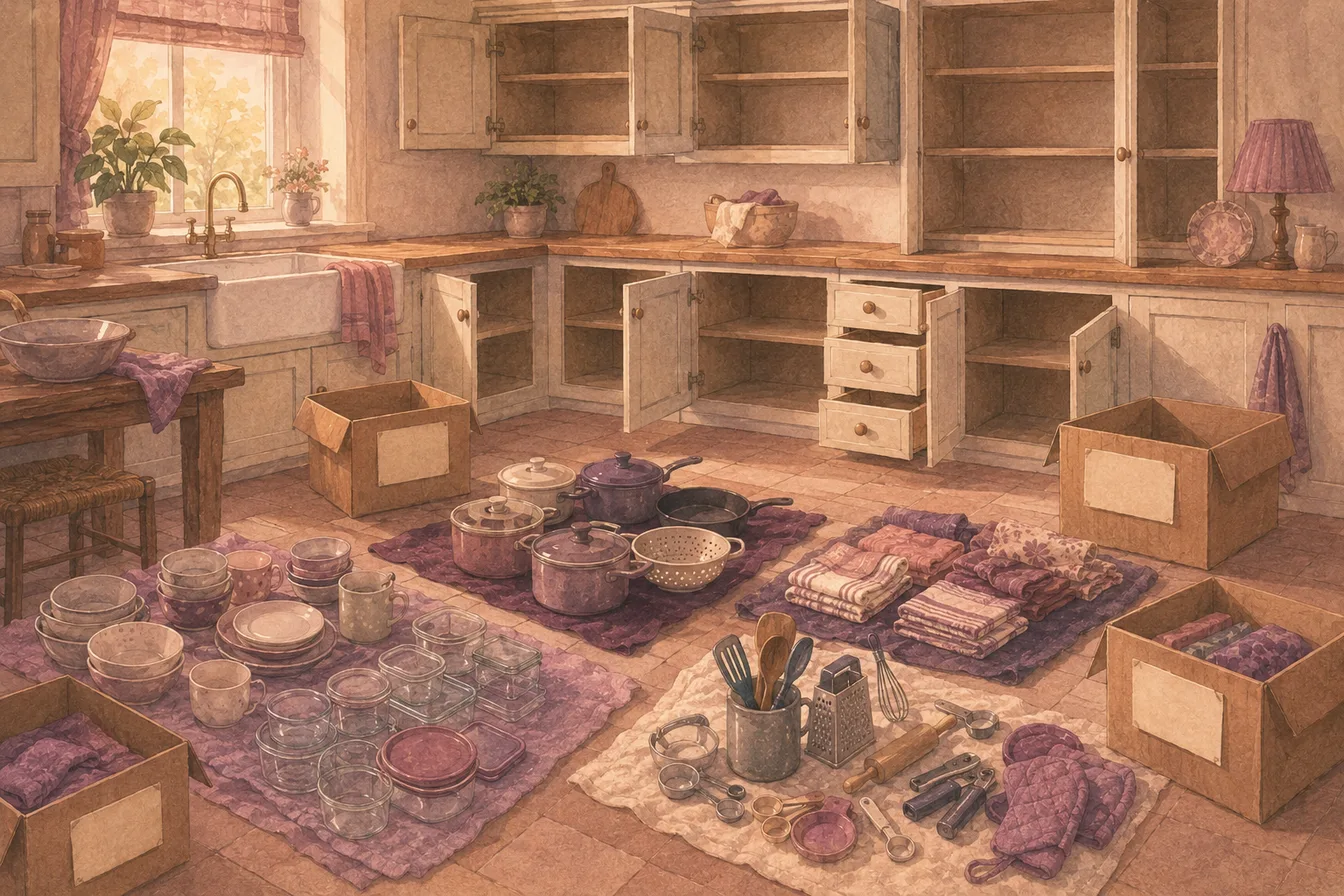
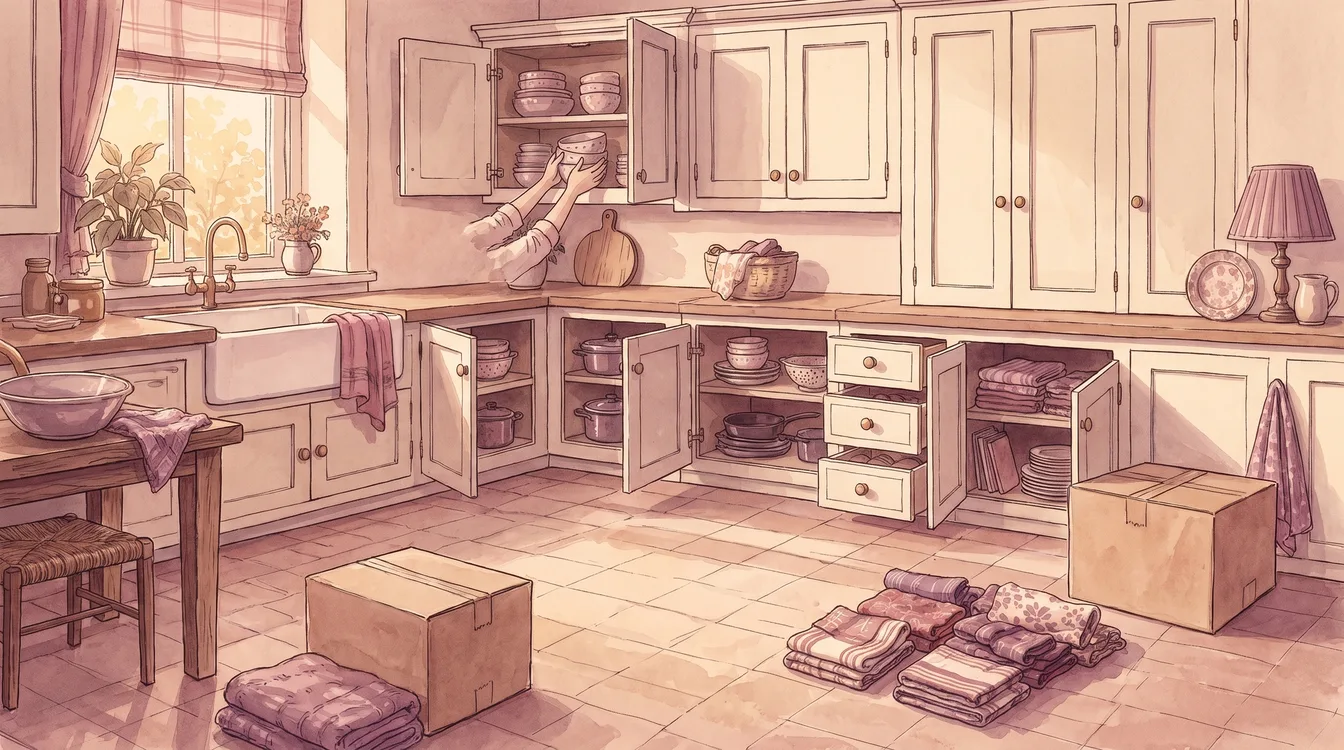
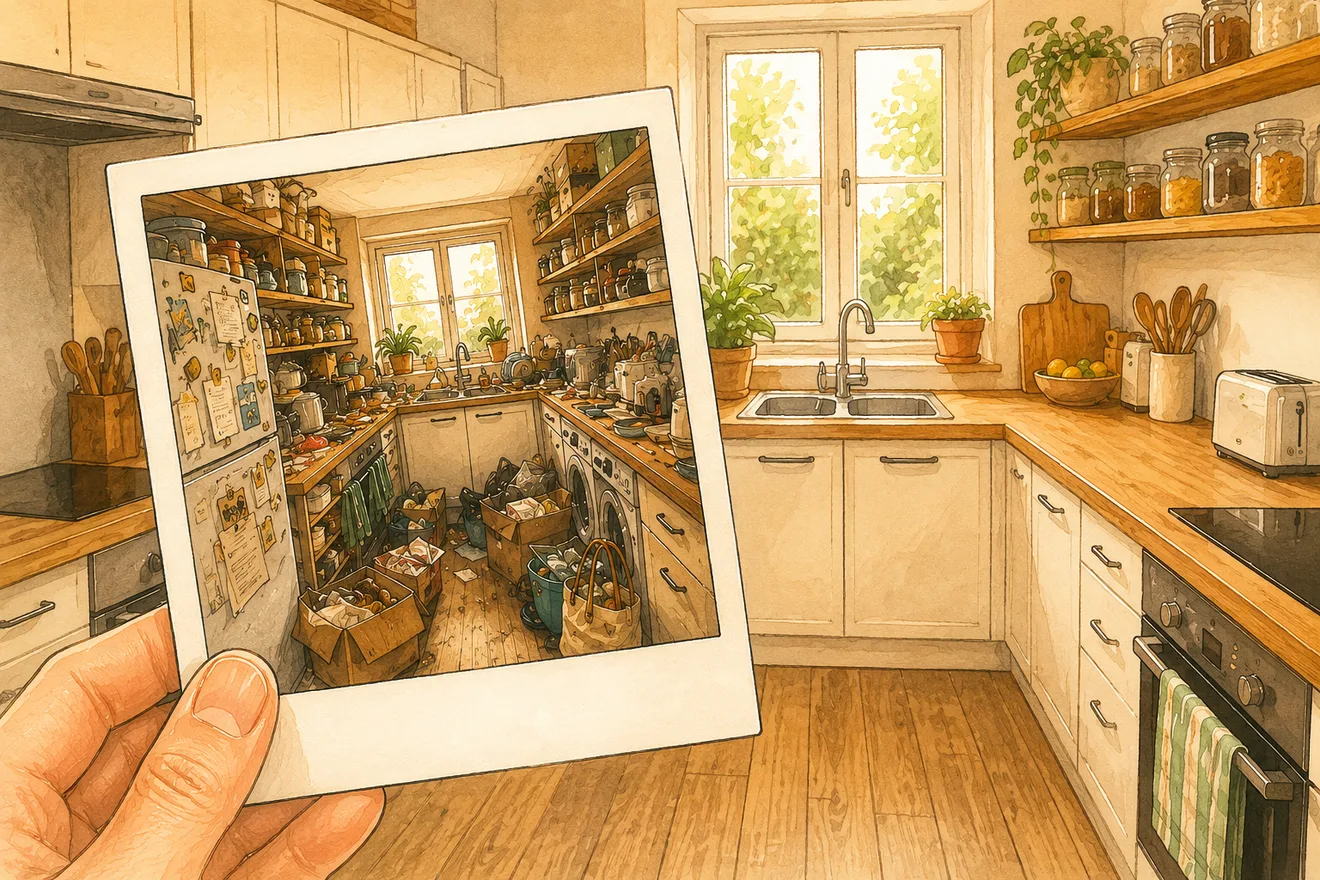
The centrepiece animation: the kitchen empties into labelled groups, then flows back in sorted. These two stills are its first and last frame.
Faster, and the maximum honest speed
Can we go faster? Often, yes: more hours, or more of us. The trade-off: bigger, broader decisions, less fine care, and a higher cost. But organising has a maximum honest speed. Past it, things just get moved around, and that usually means more work later, not less.
The speed chart from the what-to-expect page, drawn on slowly; hold on the below-the-line dip for the last three seconds.
Your things, your say
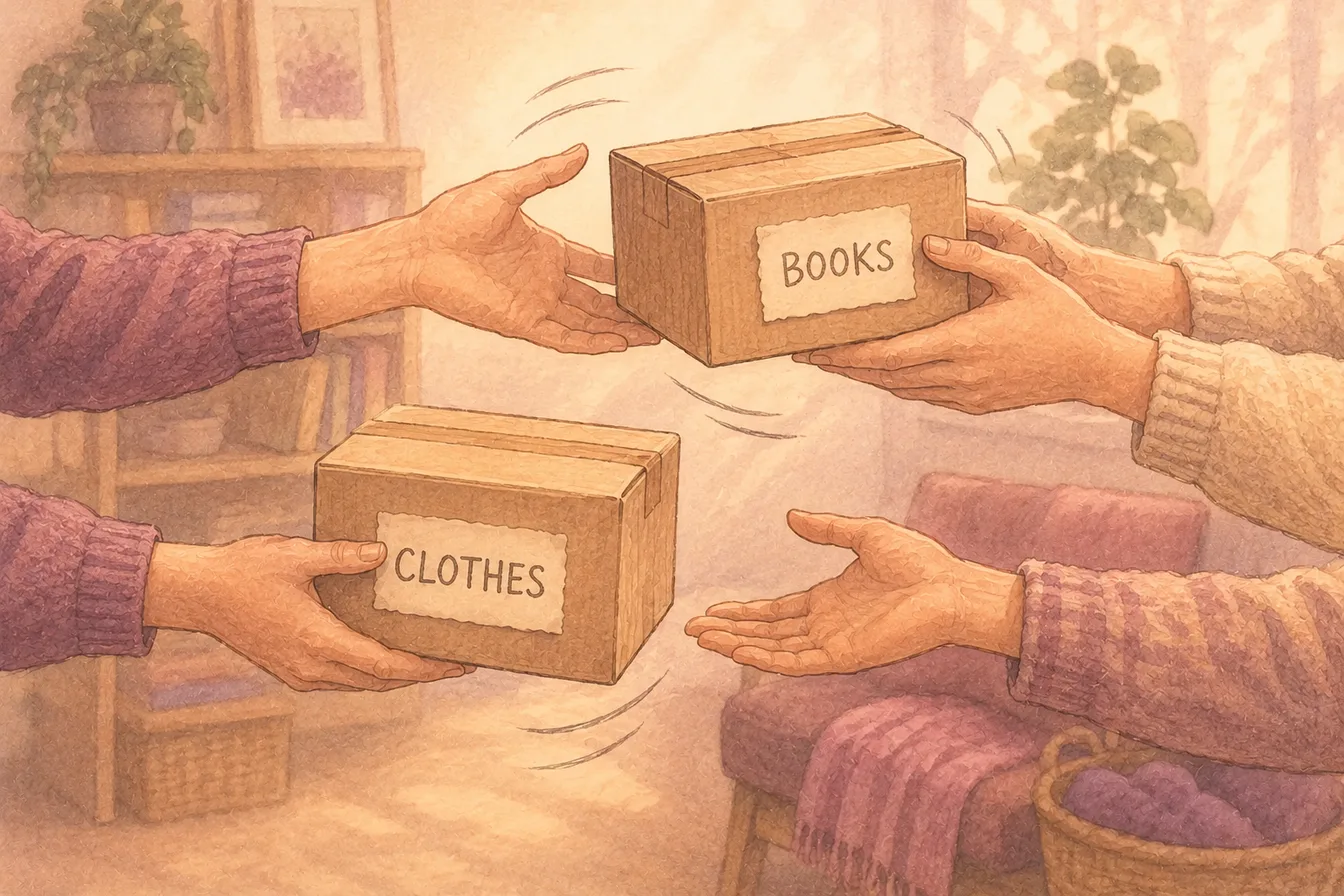
They’re your things, and only you know what they mean. Anything we’re unsure about goes into clearly marked sorting boxes for you to decide in your own time, or you can decide alongside us as we work. How much we talk during a session is up to you. And most important of all: you can’t offend us. If something feels even slightly wrong, please tell us immediately.
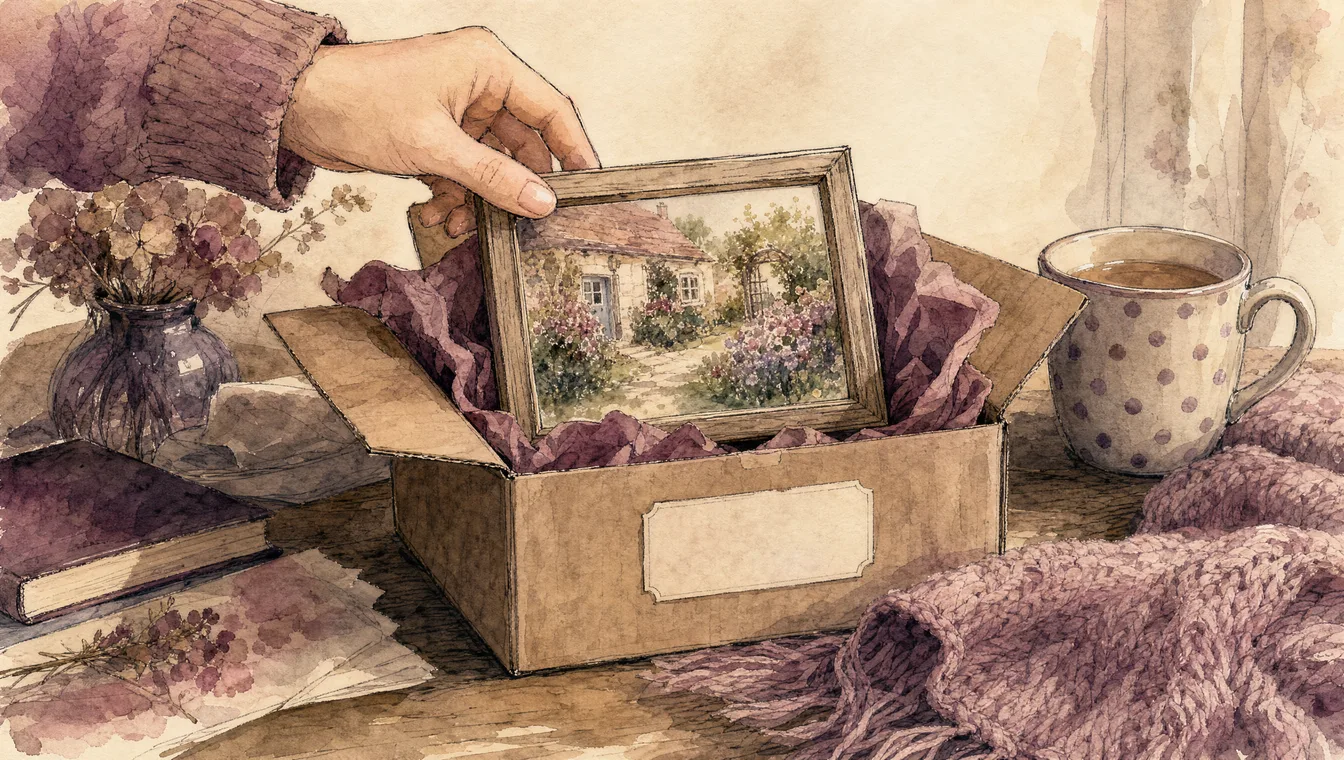
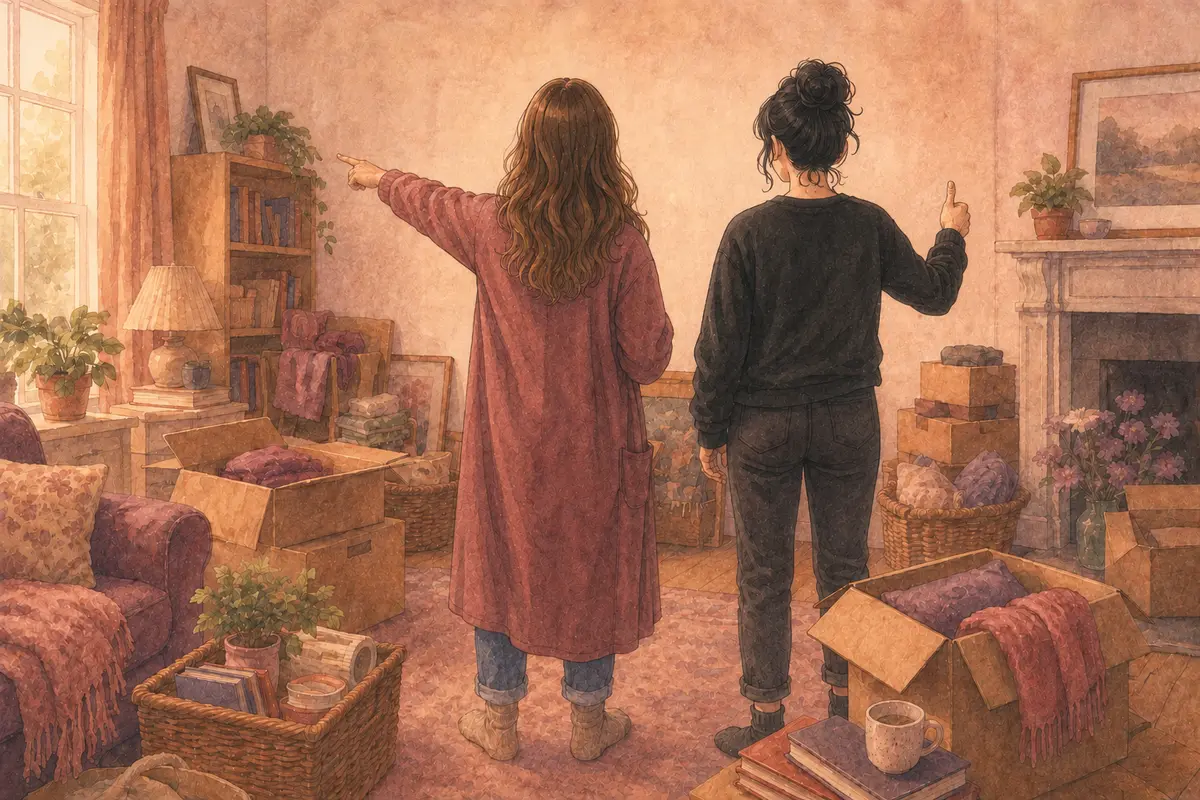
A keepsake laid into tissue like treasure; then “over there instead” and a thumbs up.
Chapter four · after
Close on hope
However your home got to where it is, it got there for a reason, and it can change.
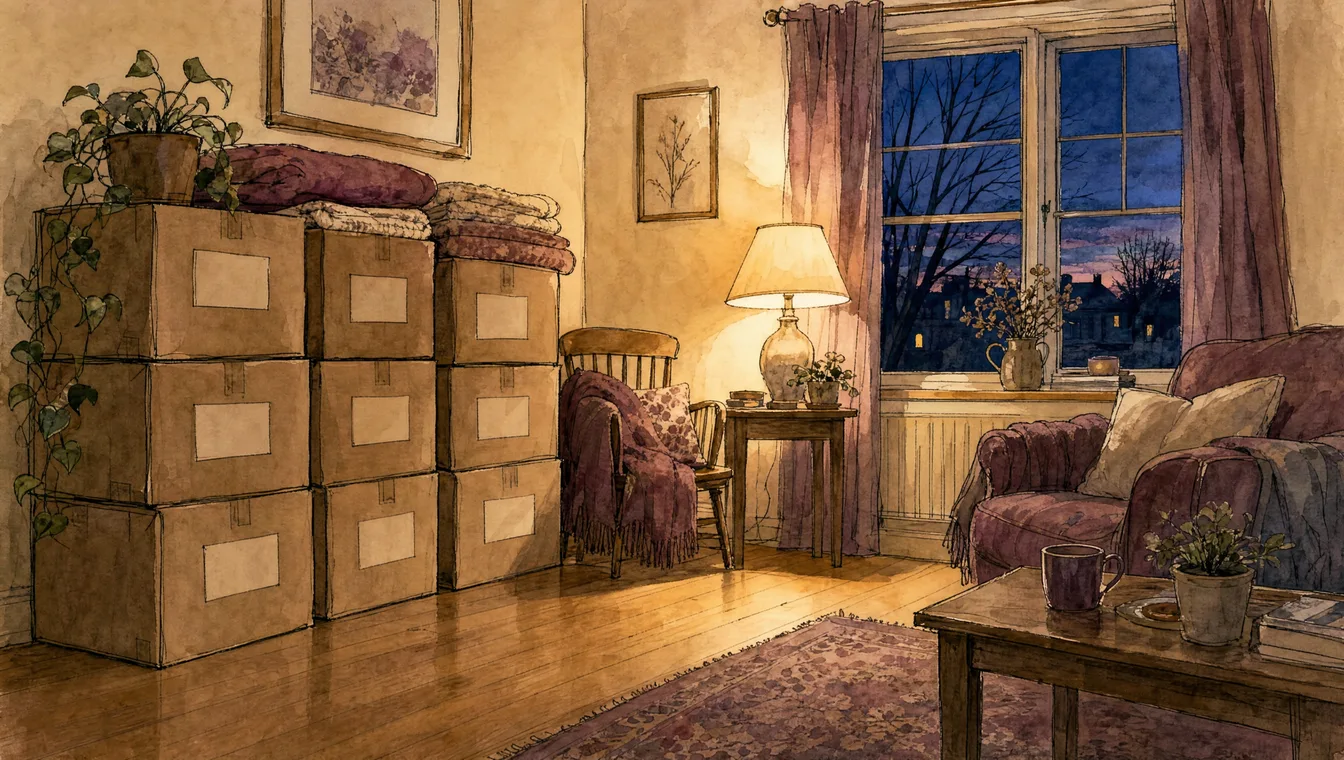
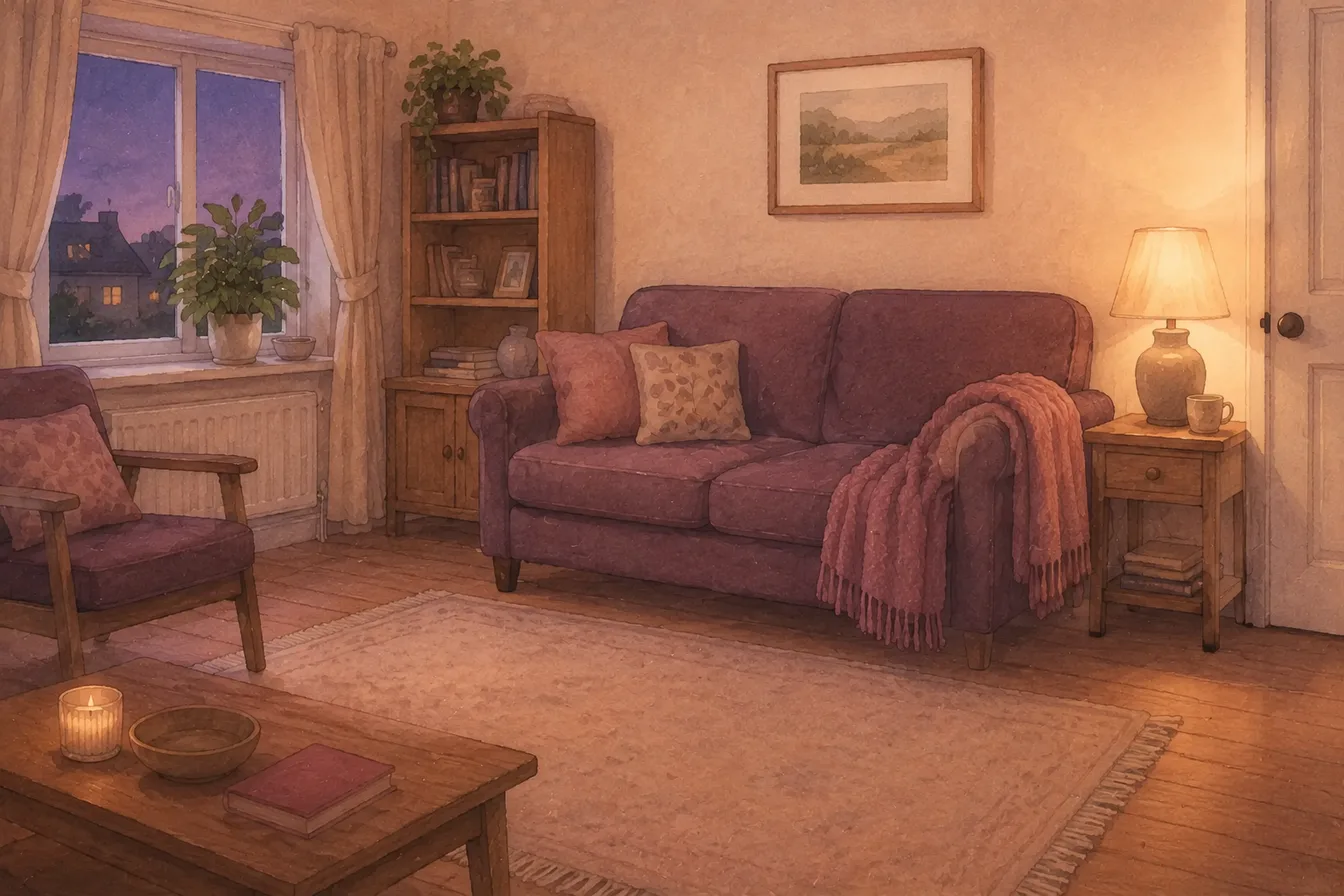
The settled room (a different home from the don’t-tidy scene, on purpose). Then the final card over a soft wash: logo, the line below, the website.
You deserve a clean and calm home.
healing-spaces-kari.co.uk
And one question for you
The film works with captions and gentle music alone, so this is entirely optional: would you fancy reading the words yourself? It’s about two minutes, read once into your phone, no filming, and we’d use the recording as it is. If not, the captions carry it and nothing is missing.