Choosing help
Which kind of decluttering help do you need?
There's more than one kind of help out there, and they're all valid, just for different situations. This page is here to help you work out which one fits you, with nothing to sell you either way.
In short: if you want systems, storage and a striking finish, a professional organiser may suit you. If deciding or starting is the hard part, person-first decluttering like ours may fit better. See the two lists.
What if you want an impressive transformation?
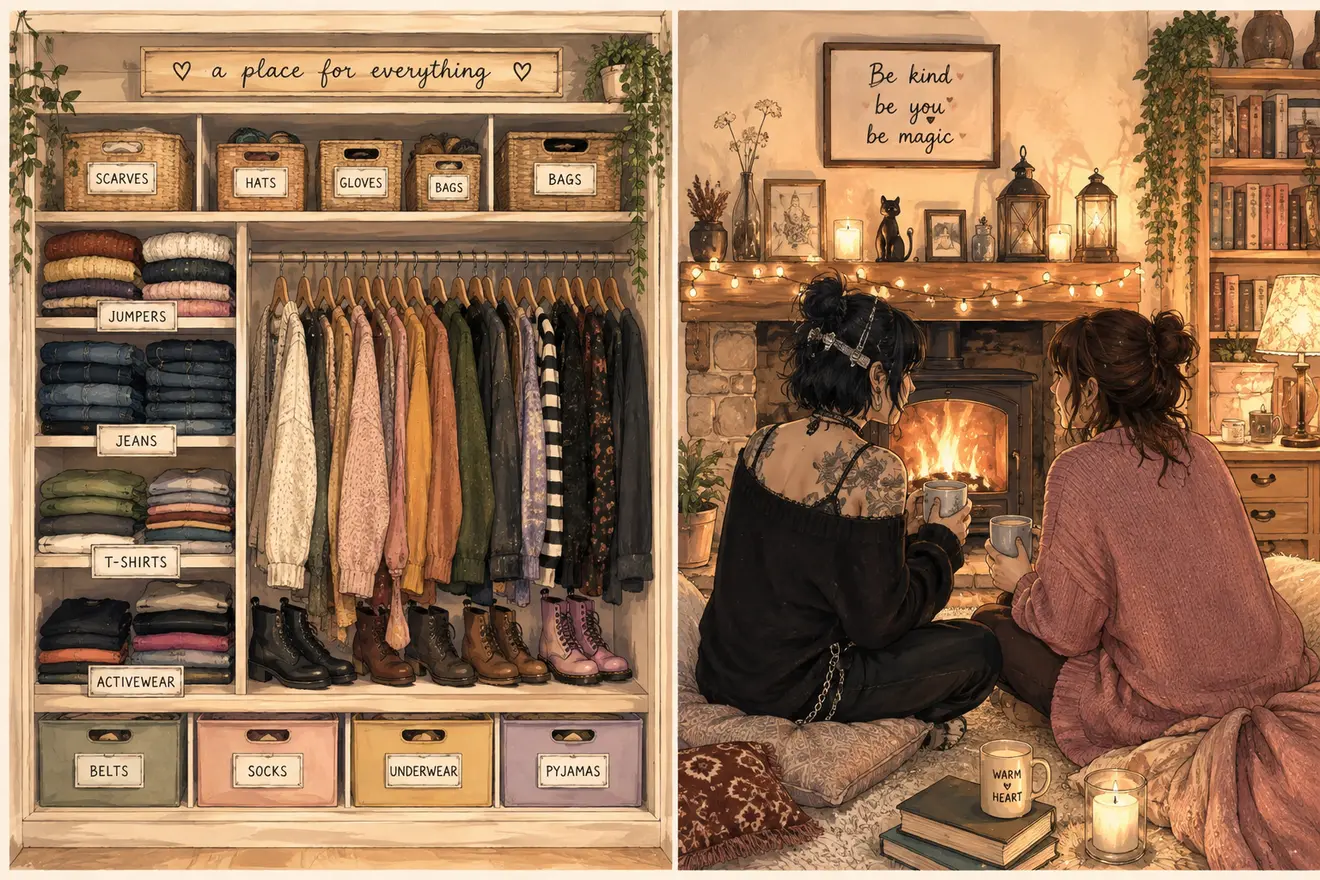
Some people know exactly what they want: a wardrobe that works, a system that holds, a home that looks and feels put together, and they want it soon. This is the more traditional type of professional organising. Think of the KonMari method and its beautifully folded drawers: organising as a craft in its own right, where the skill lives in the systems, the storage, the clever use of space and the finish. Kari knows and respects these methods. If that physical craft and a striking result are what you're after, a more traditional professional organiser may be your best bet.
What if the hard part is on the inside?
For other people, the sticking point isn't the sorting, it's what might be underneath it. Maybe things have built up over years, maybe every item comes with a decision that feels bigger than it looks, maybe getting started at all is the wall. If that's closer to your experience, this is our lane, and it starts from a different place: the person first, the room second. We call it person-first decluttering.
Starting from the person changes how a session looks. The pace follows you, but that's the smallest part of it. The bigger part is that the plan gets built around what you love: Kari has designed posters, planners and labels around a client's favourite interests, because motivation grows back faster when your home speaks your language. The organising is real and it gets done, but it's the vehicle. The destination is you, back in charge of your home and enjoying it again.
And we've chosen the harder end of this work on purpose. Some homes are ready to become lovelier; others need to become liveable again first, when health, relationships or keeping the home itself are under strain. That second kind of day is the work Kari finds most worth doing. Every decision stays yours, some sessions end mid-sort where they need to, and we'd rather leave a corner properly finished than a whole room lightly touched.
We bring lived experience to this as well as method. Kari has been where many of our clients are and found her way through, and the ways of working she shares are the ones that genuinely helped her first. The aim isn't a picture-perfect after, it's a home that feels like yours again and skills that stay with you once we've gone.
What skills will you learn that stay with you?
Some people want the sorting done, full stop, and that's fine. But if you're open to it, this is the part of the work Kari loves most: passing the how on as we go, so the change belongs to you rather than to us. A traditional organiser can teach you real skills too: how to fold, how to store, how to keep a wardrobe working. What Kari passes on is a different kind of skill, for the moments folding advice doesn't reach: starting when you're too overwhelmed to start, days when the energy isn't there, steadying yourself when feelings run big, and approaches that actually fit if you're living with ADHD or autism or carrying more complex emotional needs, which is where she is most at home. It comes from somewhere real: trauma-informed training, the DBT skills she uses herself day to day, years understanding hoarding and overwhelm, and a working map of why letting go feels bigger than it looks.
To be plain about the boundary: this isn't therapy, and we're not therapists. These are practical, learnable ways of working with your own feelings, thoughts and home, shared in the doing rather than delivered as a lecture. And if you'd rather we kept the methods to ourselves and got on with the sorting, that's completely fine too: the sharing only happens if you want it.
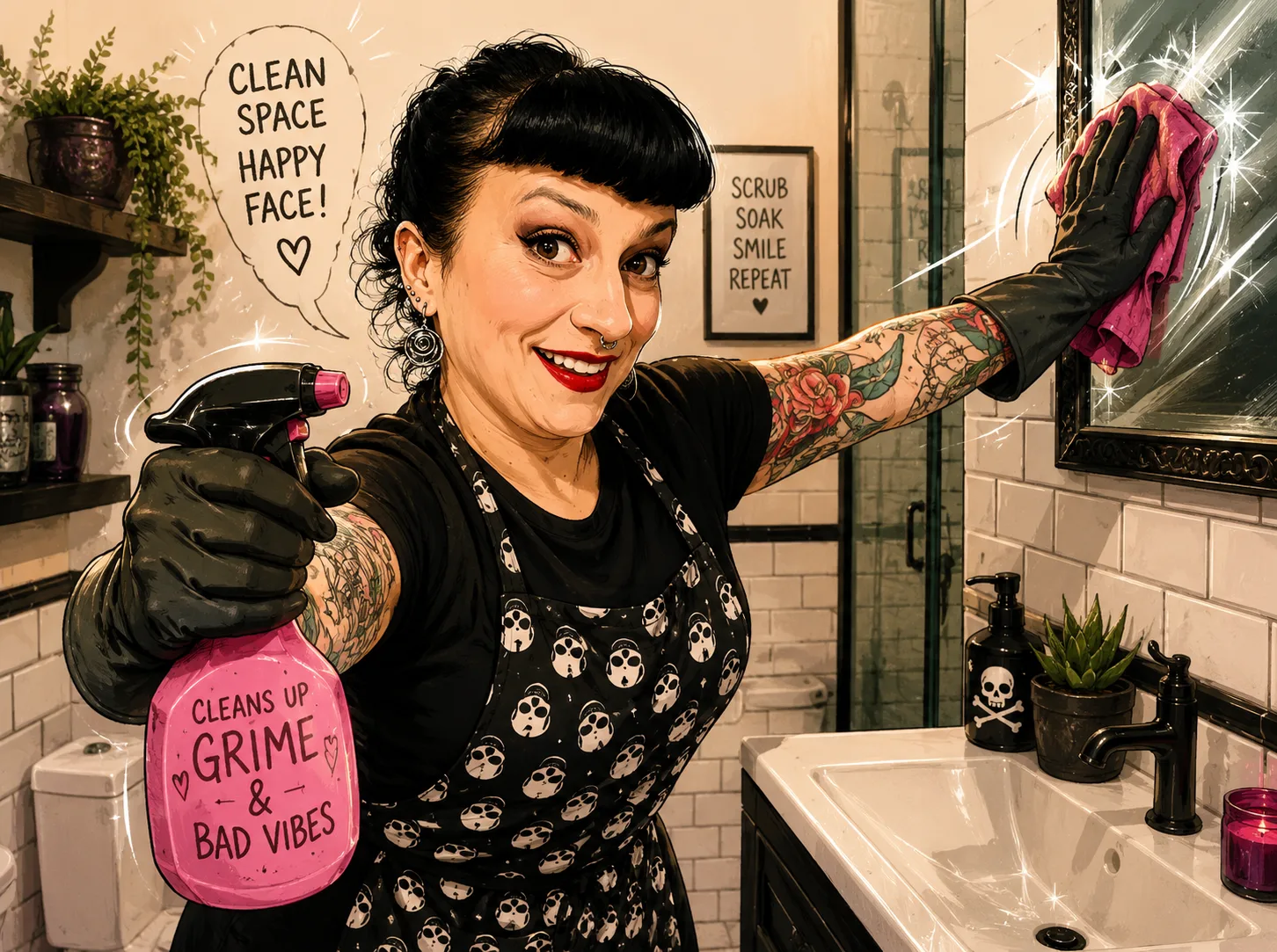
And one more difference that doesn't fit in a comparison table: Kari's enthusiasm. She genuinely enjoys this work, and it tends to be catching, which on a heavy day can matter more than any technique.
Is it really two kinds of help, or a spectrum?
The full picture isn't two camps. Most help sits somewhere along a line, more traditional organisers bring real warmth, and we happily take jobs that are mostly straight organising too. The difference is where home is: ours is the emotional end, and it's lived experience that put us there, not a clinical approach.
A professional organiser might be right for you if:
- You know broadly what you want, and you want it achieved quickly
- Letting go of things doesn't feel like the hard part
- The help you're after is physical: systems, storage, a beautiful finish
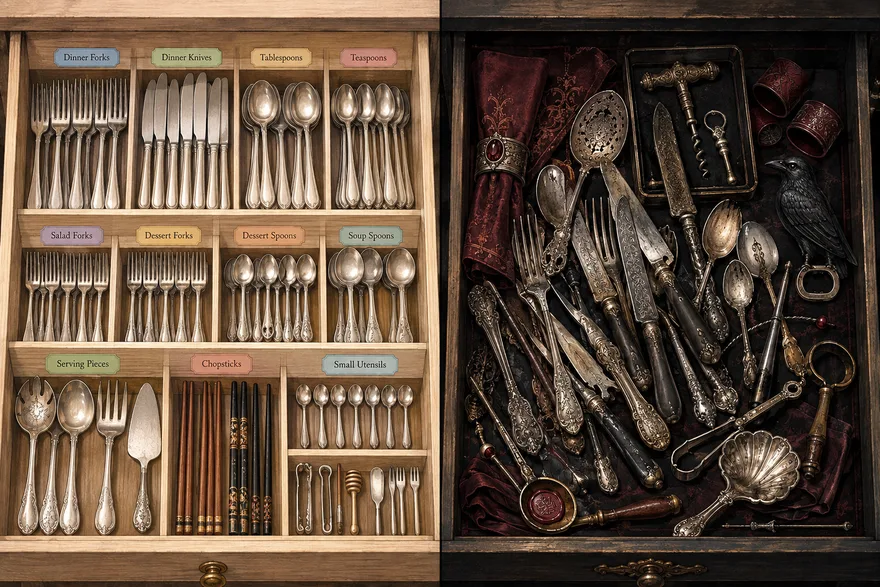
- You'd enjoy learning the craft itself: advanced folding, wardrobe systems, a home organised to a standard you're proud to show off
Person-first decluttering like ours might be right for you if:
- Deciding what to keep is the part that feels hardest, or starting feels impossible
- Things have built up over a long time, or a fast clear-out has felt wrong before
- You want help built around you and what you love, not a standard system
- Your home needs to feel liveable and yours again, more than it needs to look impressive
- You'd like to come away with skills of your own: ways through overwhelm as much as ways to fold
If you're still not sure, that's completely fine too. Get in touch and tell us a little about where you're starting from, and we'll tell you straight, even if that means pointing you somewhere else.
The first consultation is free, with no commitment and no form. See what it costs to go further on the pricing page, or get in touch to talk it through.
Kari reads every message herself and replies to arrange a time to talk.
If letting go is your hard part, you might also like the five things that make it hard to let go and what to declutter first when letting go is hard.